Why edge quality is the whole job
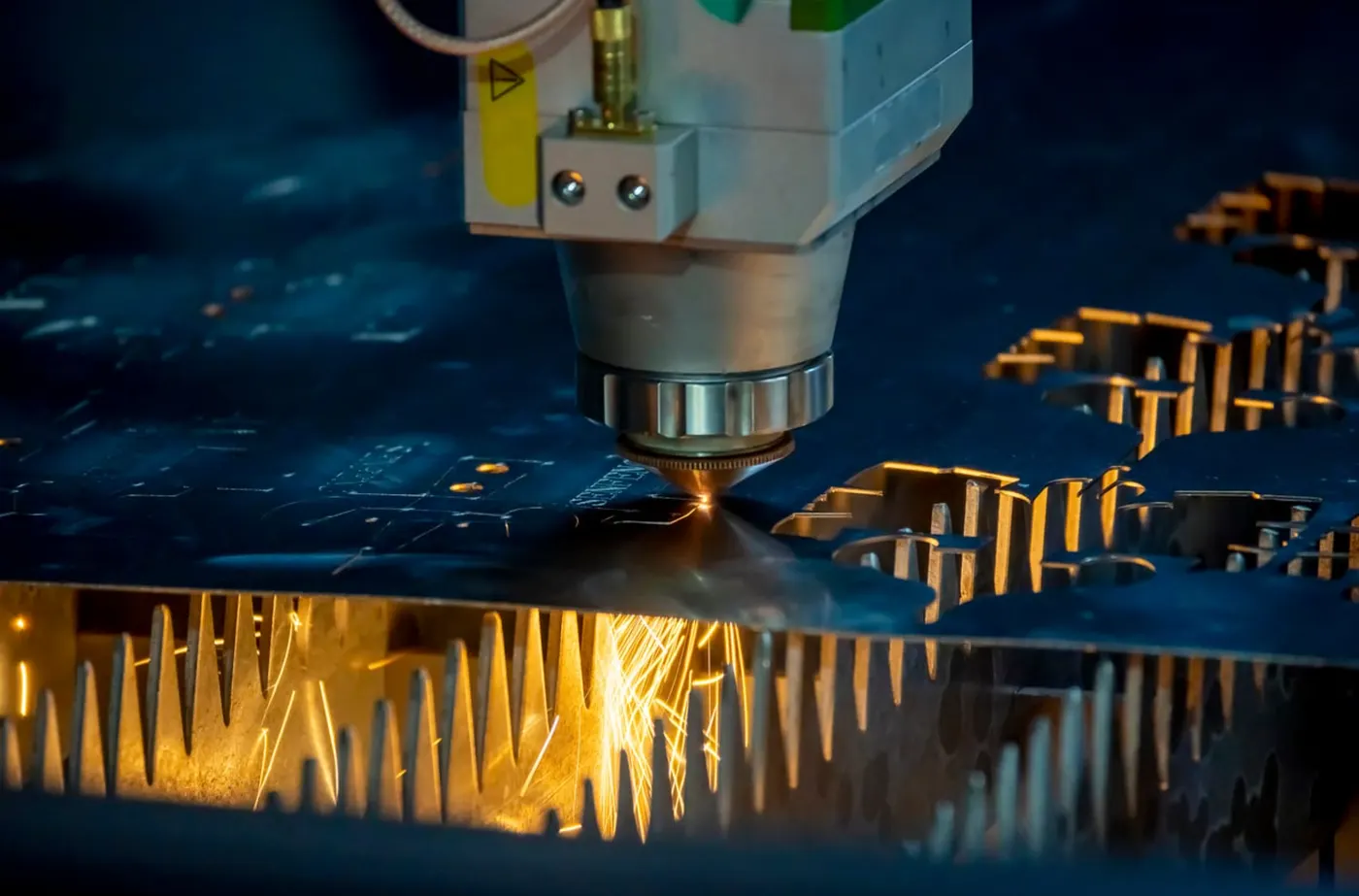
A dross-free edge is not a cosmetic preference. Dross has to be ground off before a part can be bent without marking the tooling, welded without contaminating the pool, or coated without the finish crawling. Every one of those is labour you pay for downstream, which is why a cheaper cut is often the more expensive one.
Fibre lasers hold edge quality on thin and mid-gauge sheet in a way plasma does not, and without the consumable drift that makes the tenth part different from the first.
Files and nesting
DXF and DWG are the fastest route to a cut. STEP works when the part is modelled in 3D — the flat is developed here. PDF is workable when it is dimensioned and to scale; a screenshot of a PDF is not.
Nesting is done on our side to use the sheet, not just to fit your parts on it. If a small change to your part spacing or orientation gets you more parts per sheet, you will hear about it before cutting rather than after invoicing.
What comes next, if you want it
Plenty of job work is cut-only, and that is a complete service here. But the cut parts can carry straight on to CNC bending, welding, powder coating and assembly in the same building — which means one supplier, one drawing interpretation and no courier stage between cutting and forming.
If you are currently cutting here and bending elsewhere, it is worth pricing the combined route. The saving is usually not in the machine time; it is in the two days and the re-work.